Showing posts with label libraries. Show all posts

Monday, September 22, 2014

Protecting Freedom To Read


In yesterday's paper, an article about Banned Book Week caught my interest. This annual event is celebrated by libraries across the United States this year from September 21-27. This event is fueled by the belief that people should be able to determine what they want to read without any censorship from any group.

I was surprised when I read a sampling of some of the books challenged or banned at one time or another somewhere in America. 

To Name a few:
·         The Lorax by Doctor Suess
·         Where the Wild Things Are by Maurice Sendak
·         Charlotte’sWeb by E.B. White
·         Little Women by Louisa May Alcott
·         Beloved by Toni Morrison
·         To Kill a Mocking Bird by Harper Lee
·         The Grapes of Wrath” by John Steinbeck
·         The Catcher in the Rye by J.D. Salinger

As an avid reader and one who absolutely loved all of the above, I wanted to know more. Before researching the topic on Google, I was sure that most of the challenges or banning must have occurred in the early history of our country, or at the very latest in the first half of the twentieth century. 

Not so, I learned. Challenges continue. In fact, in the decade 1990 to 2000, individuals have raised 6, 364 challenges to books, according to the Office for Intellectual Freedom. Consider, in 2003, The Adventures of Huckleberry Finn by Mark Twain was removed from the Renton School District in Washington State. Even more astounding, like the scene from The Book Thief by Markus Zuzak, the Harry Potter series was burned in 2003 in Michigan.

As long as beliefs conflict, most likely there will be those who will want to challenge the reading of some books. The difficult determination for school boards, communities, librarians and teachers will be to protect intellectual freedom while respecting personal values.

That’s a daunting task! And one we must all weigh in on so we protect our freedom to choose. Perhaps the comedian, Tommy Smothers, may have said it best: “The only valid censorship of ideas is the right of people not to listen.” Or in the case of books, choose read or not.

In the meantime, I think about the loss of insight and inspiration these books offer. Most importantly, they challenge us to think and ponder life as it is and also how it should be.  The world would be less rich without them. So, I encourage all of you to check out the lists of past banned books. If there's books on the list you haven't yet read, take them out from your library. 

Most of all, find a way to Celebrate Banned Books week and intellectual freedom!


Sunday, February 12, 2012

The Second Time Around


To read a book for the first time is to make an acquaintance with a new friend; to read it for a second time is to meet
an old one
. ~Chinese Saying
I'm still a loyal Survivor fan despite the fact the TV format remains much the same with every year’s watching. For me, it’s a little like rereading a book—I learn something new with each read. That analogy between Survivor and books got me thinking. If I had to live on a deserted island for a year, what book would sustain me for that time?
I thought first of the Bible, but suppose that was already part of the survival kit, what else would I take? Multiple titles kept popping into my head.


For this, I definitely needed the input of some fellow avid readers. Here are some of their selections:

Linda, our Island librarian, answered with the quick certitude you would expect from someone lucky enough to spend her working life surrounded by books. The book she would take: Timeline by Michael Crichton. Linda says, “His story illustrates how quantum theory could make time travel possible and sweeps you into the mystery and adventure of the story, while Crichton makes 14th century daily life come alive.”
Ginger, my firstborn, wasn’t quite as able to narrow her choices down, so she finally claimed two: Poisonwood Bible, by Barbara Kingsolver which she say has so many levels to it that I’m sure I’ve missed some.” Her second pick: a compilation of Maya Angelou’ s writings. “Her melodic voice as I read helps me stay calm and at the same time keeps my brain working. That I would definitely need if I were in a deserted place!”
Mary, a book devotee and regular at our St. Francis Book Group, didn't hesitate. Her quick answer: And the Ladies of the Club, by Helen Santmyer. The story tells the story of two 18 year-olds who belong to a book club and their friendship through happy and difficult times that span 60 yearsthrough their lifetimes. It’s one of those books, Mary adds, that you hate to see end. She also says the author took 35 years to write the book and was in her 80’s when she completed the task!

Alicemarie, leader of my Florida book group, says, “One book??? I may not make it through the year!” But forced to choose, she picked Kitchen Table Wisdom, by Rachel Naomi Rement, M.D., personal stories the author collected while working with people with life-threatening illness. “These stories—some humorous, others gut-wrenching—all provide food for deeper and more expansive thinking about my own life.”—something she would have lots of time to do while on her solitary sojourn.

Gary, a psychologist and one-time restaurateur, thought first and foremost about what it would be like to live on an undisturbed island. Armed with an insatiable curiosity and Exotica, by Alfred B. Graf, he would use his time wisely by learning more about his tropical habitat. “Exotica is the botanist’s bible and will help me identify all the flora on the island.”

Kim, a member of my writing group, also thought bringing a book possibly found on Amazon with a title like, “How to Survive on a Deserted Island,” would be the most sensible. Then again, she decided, it would make for dull bedtime reading. “My poetry books are what I read over and over again.” Any would do, she adds, but the ones she most often opens are The Oxford Book of Short Poems edited by James Michie and P. J. Kavanaugh or Best Remembered Poems, edited by Martin Gardner.
One of the perks in writing this posting was the chance to learn about a few books I haven’t yet read. Still, I’m not any closer to choosing the single book that would be a part of my survival kit.
Send me your suggestions as I need more help! I’ll do a follow up on the topic and promise by then, to stop wavering and come to a conclusion of my own…


Sunday, March 13, 2011

Revisiting a Classic

A classic is a book that has never finished saying what it has to say.  ~Italo Calvino, The Literature Machine
What truly makes a classic a classic? For me, it's a book that I can still relate to, one that still holds relevance, and as Calvino says so well, still has something to say. A year or so ago, we chose "The House of the Seven Gables" for our St. Francis book group. After reading it, we all agreed it hadn't stood the test of time—at least for us.

So, when another book group here in Florida (our respite from the cold Island winter) chose "The Scarlet Letter," it was with much trepidation that I began to read another Hawthorne book, this one his first, published in 1850.

Still, I reminded myself one of the great gifts of belonging to a book group is reading or re-reading a book that we would not otherwise choose on our own. Those of us who are inveterate book group members feel compelled to read the chosen selection no matter how painful the process. And for me, the pressure was greater because I volunteered to co-lead the discussion of "The Scarlet Letter."

In my second reading of Hawthorne's classic, I discovered the following:

Modern day reading has changed my reading experience expectations.
At first, I fretted over the slow movement of the book, the long passages, and antiquated language, wishing he would just get to the point! I can only liken it to the experience of watching some of my favorite old movies that, when revisited, move much too slowly for me. I realize that I've bought into the world of instant gratification. Newer novels, even good ones, "feed" us faster.


Getting the most from a classic requires slower and more attentive reading.
When I forced myself to read more carefully and thoughtfully, I found great beauty in much of Hawthorne's text. Consider these lines, "…the scarlet letter ceased to be a stigma which attracted the world's scorn and bitterness, and became a type of something to be to be sorrowed over, and looked upon with awe, yet with reverence, too." 


Life experience affects my view much more than I realized.
The premise choosing this book was to see how reading this book later in life might differ from our high school experience. Several members of the group spoke about how their first reading focused entirely on Hester Prynne and how her name remained imprinted in their memories yet they didn't remember any of the other characters. For me, I had a greater appreciation for her strength as a character. As a teenager, I mainly saw her as a victim and felt the injustice inflicted upon her. I realized my view of women in general has changed greatly since the '50's. Clifton Fadiman says it well in his quote, "When you re-read a classic you do not see in the book more than you did before.  You see more in you than there was before." 

Classics withstand the test of time because the themes expressed are universal and timeless.
While no one is overtly placed in a pillory or made to stand with a sign signifying their shame, we still do expect public shaming to take place. Perhaps the Puritans were more honest in doing it as openly as they did. Consider how we expect our celebrities to publicly expose their personal extramarital affairs, demand details, and expect an apology. Or the shame teens heap on one another with pictures and comments on Facebook. We call it bullying and it is, but it's also public shaming and shunning. Presented more graphically and in modern language, adultery, pride, gender issues, and forbidden love still sell books!


The use of symbolism and irony have an ageless quality that continues to resonate with readers.
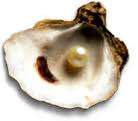
Did Hawthorne choose Pearl as Hester's daughters name to draw a parallel to the sacrifice an oyster undertakes to make a pearl? Consider his masterful use of irony as manifested how the ambiguity of sin was expressed in the loveliness of the embroidered "A", or how she chose to remain in the village and continue to wear the letter long after her transgression was forgotten.

There's a Chinese saying, "To read a book for the first time is to make an acquaintance with a new friend; to read it for a second time is to meet an old one."


Here are ten other classics I'd recommend:
1. To Kill a Mocking Bird by Harper Lee
2. East of Eden by John Steinbeck
3. The Great Gatsby by F. Scott Fitzgerald
4. Catcher in the Rye by J.D. Salinger
5. Alice's Adventures in Wonderland by Lewis Carroll
6. Moby Dick by Herman Melville
7. 1984 by George Orwell
8. Robinson Crusoe by Daniel Defoe
9. Rebecca by Daphne du Maurier
10. All the King's Men by Robert Penn Warren


These are my top ten, but you can view more at Top 100 Best Novels Of All Time http://wealthwisdomandsuccess.com/.

Whether you read these books with a book group or on your own, they're worth a second look! Take a trip to a favorite place and revisit a classic. You'll learn things about life and yourself you've forgotten or never quite realized you knew.
Let me know which are your favorite classics!

Embrace a classic, and remember, "Books let us into their souls and lay open to us the secrets of our own."  William Hazlitt