Showing posts with label words. Show all posts

Saturday, September 1, 2012

It's all in a word

            Recently a neighbor told me a story about an old man she’d met at a graduation party.
“How old was he?” I asked.
“Old,” she said, “Had to be seventy-five, at least.”
“Oh, you mean he was an old(er) man.”
She looked at me with a blank stare and must have realized that I had to be approaching the age of the man she was telling me about. It was at that moment I decided I would never be “old,” but simply “old(er).” So much young(er) sounding, don’t you think?
 
The word “old” is a word to describe food left too long in the refrigerator. It just doesn’t smell right. Or underwear with holes in it.  Something to throw out.

As I ponder the vast chasm created between these words simply by adding -er, I realize what power the simple suffix holds. After all, who wouldn’t want to be rich(er) rather than just rich, smart(er) rather than smart, or thinn(er) rather than thin. Ah, scratch that last one. I’d settle for just thin since that’s not been an adjective applied to me in too many years to count… But the adding of this mighty mite of a suffix can also have a negative voice too. After all, who would want to be fatt(er) than fat or mean(er) than mean?
Just below that article, I see another headline, "Baby delivered by Atlantic City Policeman." Now there's an age word that conjures all positive images like cuddly and cute. All good unless you happen to be a new parent, then you might add sleepless nights.
I begin thinking of other words that connote ages. Teens, now there's one that definitely has a note of cool to it. Then again, for parents, it probably translates to more sleepless nights. How about middle age? I remember viewing that milestone as the first stumbling block in the world of age descriptors. That term resonated as rather frumpy and indecisive. Looking back, I see it as the approach to the precipice of negative age words.
And now, I’m really feeling unnerved by this whole age quantifier. I decide to check out some of the experts’ views. Erikson, that’s where I’ll start. During my graduate counseling courses he was always my go to guy for a psychosocial theory of development. Each stage of life, he believed, involves a particular task in order to move on to the next stage of life. I consult my number one research tool: Google.
Definitely, a downer. Strange, I think, how as a forty-year old student, I believed he was right on target, totally hitting the bulls eye of life. Now I’m not so sure. I read on and see I’ve reached the eighth stage of development. The point at which I must answer the question,  Did I lead a meaningful life?
 
Wait a minute. I’m still in the midst of that meaningful life, busy trying to do all the things I never had time to do. No time to worry about the past. Maybe lat(er)… I read on and see that according to my former counseling super guru I am also at the final stage, the last step on the stairs, of my earth journey. That sounds so final. And according to Erikson, this stage started at age 65. I don’t let that number get to me, though, because a lot has changed since he developed his thesis sometime in the ‘50’s. 
 
     I continue reading and see my present life task is all about reflecting back on my past life. Well, I have to grudgingly admit he may have a point there. I do find myself thinking about my former experiences from time to time and I know my children and grandchildren get a glazed look in their eyes when I repeat stories they’ve heard a gazillion times. The word “gazillion” is one of their words, not mine. And so, I guess I must admit that I am in that place. Sort of, but not totally. 

But more than I think about my past life, I think of the present and the future with hope for what is ahead. Instead of focusing on reflections of past accomplishments and misdeeds, my efforts include tasks like finding a place to dance—before 11 PM to music I love. And if not, I can always dance in the kitchen with my lov(er), the old(er) man who’s danced with me for the past 50 years.

So, I will continue to grow old(er), but never be old.
  
psychology.about.com/od/psychosocialtheories/a/psychosocial.htm

Thursday, July 28, 2011

Quotes That Stand the Test of Time


How so many writers throughout history have been able to pen words that endure through the years always fills me with awe, especially when they pack a lot of ageless wisdom into those words.

So, whenever I see a quote I like, I add it to my "angel" book, noting the date and the individual who laced those words together so well. Eventually, I'll collate them all into a small collection, note why I like them and take it to Staples and have it made into a spiral book for family members—my way to keep those wonderful quotes alive and share what I love with those I love.

When I was writing a recent blog, "A world without childhood?" the expression, "youth is wasted on the young," came to mind. While I didn't use it in my posting, I keep wondering: Is it a quote or a cliché? Or a quote that became a cliché? Sayings sometimes seem to have a way of doing that—said so often that time seems to wear them down like the tires on a farm truck. It wasn't in my book of clichés, so once again, I turned to Google, the place where you can find almost anything except a clean pair of underwear.

When the page came up, I was surprised to see George Bernard Shaw (1856-1950) coined that expression. My curiosity piqued, I searched through some of his other quotes. Definitely found some that belong in my quote book. But what truly amazed me was how relevant they are today. Consider these quotes:

On Politics
  • "A government that robs Peter to pay Paul can always depend on the support of Paul." Whatever side of the political fight over what our country should do or not do regarding tax cuts/increases and the nation's debt crisis, this quote would certainly describe the views of some of our politicians, don't you think?
  • "An election is a moral horror, as bad as a battle except for the blood; a mud bath for every soul concerned in it." It seems to me whenever any politician appears to rise in the polls, some hint of scandal or incapacitating illness surfaces. Like Michelle Bachmann's migraines. She wouldn't ever be my choice, but would a migraine really preclude her ability to be president? Pundits predict the 2012 election will be the worst negative campaign in the history of our country.
  • "An asylum for the sane would be empty in America." Do I need to add any comment to this quote?
On life
  • "Don't waste your youth on growing up." This hits home today especially when I see little girls sporting Madonna like outfits and eye make up, or little girls playing with breast feeding dolls. Childhood needs to be a time to be a child. Otherwise, George Bernard Shaw's other quote, "Youth is wasted on the young," becomes sad but true.
  • "We don't stop playing because we grow old; we grow old because we stop playing." So, whatever your age, be silly! Dance in the kitchen or join a flash mob, perform at an Open Mic, sing in a karaoke bar, wear whatever you like no matter how much you hate your flabby arms. As my grandson, John says, "take a risk."
  • "I want to be all used up when I die." This quote is perhaps my favorite of all. Such a lovely sentiment—to have done everything you've wanted to do, to have lived life fully with no regrets, to have loved unconditionally, loved long and hard.. Yes, I definitely want to be all used up when I die.
Facts about George Bernard Shaw:
  1. He won the Nobel Prize for literature in 1925.
  2. For seven years, he wrote five unsuccessful novels.
  3. He was a socialist.
  4. He supported women's rights and wrote about them in 1891.
  5. His last play, Why She Would Not, was completed on July 23, 1950, three days before his ninety-fourth birthday.
  6. One of his most famous plays was Pygmalion.
For more information about this great playwright, visit these sites.
Bernard: A Brief Biography
http://www.biography.com/articles/George-Bernard-Shaw-9480925"
http://www.notablebiographies.com/Sc-St/Shaw-George-Bernard.html

Sunday, March 13, 2011

Revisiting a Classic

A classic is a book that has never finished saying what it has to say.  ~Italo Calvino, The Literature Machine
What truly makes a classic a classic? For me, it's a book that I can still relate to, one that still holds relevance, and as Calvino says so well, still has something to say. A year or so ago, we chose "The House of the Seven Gables" for our St. Francis book group. After reading it, we all agreed it hadn't stood the test of time—at least for us.

So, when another book group here in Florida (our respite from the cold Island winter) chose "The Scarlet Letter," it was with much trepidation that I began to read another Hawthorne book, this one his first, published in 1850.

Still, I reminded myself one of the great gifts of belonging to a book group is reading or re-reading a book that we would not otherwise choose on our own. Those of us who are inveterate book group members feel compelled to read the chosen selection no matter how painful the process. And for me, the pressure was greater because I volunteered to co-lead the discussion of "The Scarlet Letter."

In my second reading of Hawthorne's classic, I discovered the following:

Modern day reading has changed my reading experience expectations.
At first, I fretted over the slow movement of the book, the long passages, and antiquated language, wishing he would just get to the point! I can only liken it to the experience of watching some of my favorite old movies that, when revisited, move much too slowly for me. I realize that I've bought into the world of instant gratification. Newer novels, even good ones, "feed" us faster.


Getting the most from a classic requires slower and more attentive reading.
When I forced myself to read more carefully and thoughtfully, I found great beauty in much of Hawthorne's text. Consider these lines, "…the scarlet letter ceased to be a stigma which attracted the world's scorn and bitterness, and became a type of something to be to be sorrowed over, and looked upon with awe, yet with reverence, too." 


Life experience affects my view much more than I realized.
The premise choosing this book was to see how reading this book later in life might differ from our high school experience. Several members of the group spoke about how their first reading focused entirely on Hester Prynne and how her name remained imprinted in their memories yet they didn't remember any of the other characters. For me, I had a greater appreciation for her strength as a character. As a teenager, I mainly saw her as a victim and felt the injustice inflicted upon her. I realized my view of women in general has changed greatly since the '50's. Clifton Fadiman says it well in his quote, "When you re-read a classic you do not see in the book more than you did before.  You see more in you than there was before." 

Classics withstand the test of time because the themes expressed are universal and timeless.
While no one is overtly placed in a pillory or made to stand with a sign signifying their shame, we still do expect public shaming to take place. Perhaps the Puritans were more honest in doing it as openly as they did. Consider how we expect our celebrities to publicly expose their personal extramarital affairs, demand details, and expect an apology. Or the shame teens heap on one another with pictures and comments on Facebook. We call it bullying and it is, but it's also public shaming and shunning. Presented more graphically and in modern language, adultery, pride, gender issues, and forbidden love still sell books!


The use of symbolism and irony have an ageless quality that continues to resonate with readers.
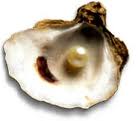
Did Hawthorne choose Pearl as Hester's daughters name to draw a parallel to the sacrifice an oyster undertakes to make a pearl? Consider his masterful use of irony as manifested how the ambiguity of sin was expressed in the loveliness of the embroidered "A", or how she chose to remain in the village and continue to wear the letter long after her transgression was forgotten.

There's a Chinese saying, "To read a book for the first time is to make an acquaintance with a new friend; to read it for a second time is to meet an old one."


Here are ten other classics I'd recommend:
1. To Kill a Mocking Bird by Harper Lee
2. East of Eden by John Steinbeck
3. The Great Gatsby by F. Scott Fitzgerald
4. Catcher in the Rye by J.D. Salinger
5. Alice's Adventures in Wonderland by Lewis Carroll
6. Moby Dick by Herman Melville
7. 1984 by George Orwell
8. Robinson Crusoe by Daniel Defoe
9. Rebecca by Daphne du Maurier
10. All the King's Men by Robert Penn Warren


These are my top ten, but you can view more at Top 100 Best Novels Of All Time http://wealthwisdomandsuccess.com/.

Whether you read these books with a book group or on your own, they're worth a second look! Take a trip to a favorite place and revisit a classic. You'll learn things about life and yourself you've forgotten or never quite realized you knew.
Let me know which are your favorite classics!

Embrace a classic, and remember, "Books let us into their souls and lay open to us the secrets of our own."  William Hazlitt

Monday, February 1, 2010

Coining New Words and Reinventing Old Ones

There's nothing more fun than a play on words, or trying to invent new ones. My daughter sent me this and I thought you might like to read about this contest, the Mensa Invitational, sponsored by the Washington Post. Readers are challenged to take any word from the dictionary, alter it by adding, subtracting, or changing one letter, and supply a new definition.

The winners are:

1. Cashtration (n.): The act of buying a house, which renders the subject financially impotent for an indefinite period of time.

2. Ignoranus: A person who's both stupid and an asshole.

3. Intaxication: Euphoria at getting a tax refund, which lasts until you realize it was your money to start with.

4. Reintarnation: Coming back to life as a hillbilly.

5.. Bozone (n.): The substance surrounding stupid people which stops bright ideas from penetrating. The bozone layer, unfortunately, shows little sign of breaking down in the near future.
6. Foreploy: Any misrepresentation about yourself for the purpose of getting laid.
7. Giraffiti: Vandalism spray-painted very, very high.
8. Sarchasm: The gulf between the author of sarcastic wit and the person who doesn't get it.

9. Inoculatte: To take coffee intravenously when you are running late.

10. Osteopornosis: A degenerate disease. (This one got extra credit.)

11. Karmageddon: It's like, when everybody is sending off all these really bad vibes, right? And then, like, the Earth explodes and it's like, a serious bummer.

12. Decafalon (n.): The gruelling event of getting through the day consuming only things that are good for you.
13. Glibido: All talk and no action.

14. Dopeler Effect: The tendency of stupid ideas to seem smarter when they come at you rapidly.

15. Arachnoleptic Fit (n.): The frantic dance performed just after you've accidentally walked through a spider web.

16. Beelzebug (n.): Satan in the form of a mosquito, that getsinto your bedroom at three in the morning and cannot be cast out.

17. Caterpallor (n.): The color you turn after finding half a worm in the fruit you're eating.


The Washington Post has also published the winning submissions to its yearly contest, in which readers are asked to supply alternate meanings for common words.

And the winners are:

1. Coffee, n. The person upon whom one coughs.

2. Flabbergasted, adj. Appalled by discovering how much weight one has gained.


3. Abdicate, v. To give up all hope of ever having a flat stomach.

4. esplanade, v. To attempt an explanation while drunk.

5. Willy-nilly, adj. Impotent.

6. Negligent, adj. Absent mindedly answering the door when wearing only a nightgown .

7. Lymph, v. To walk with a lisp.

8. Gargoyle, n. Olive-flavored mouthwash.

9. Flatulence, n. Emergency vehicle that picks up someone who has been run over by a steamroller.

10. Balderdash, n. A rapidly receding hairline.

11. Testicle, n. A humorous question on an exam.

12. Rectitude, n. The formal, dignified bearing adopted by proctologists.

13. Pokemon, n. A Rastafarian proctologist.

14. Oyster, n. A person who sprinkles his conversation with Yiddishisms.

15. Frisbeetarianism, n. The belief that, after death, the soul flies up onto the roof and gets stuck there.

16. Circumvent, n. An opening in the front of boxer shorts worn by Jewish men.